


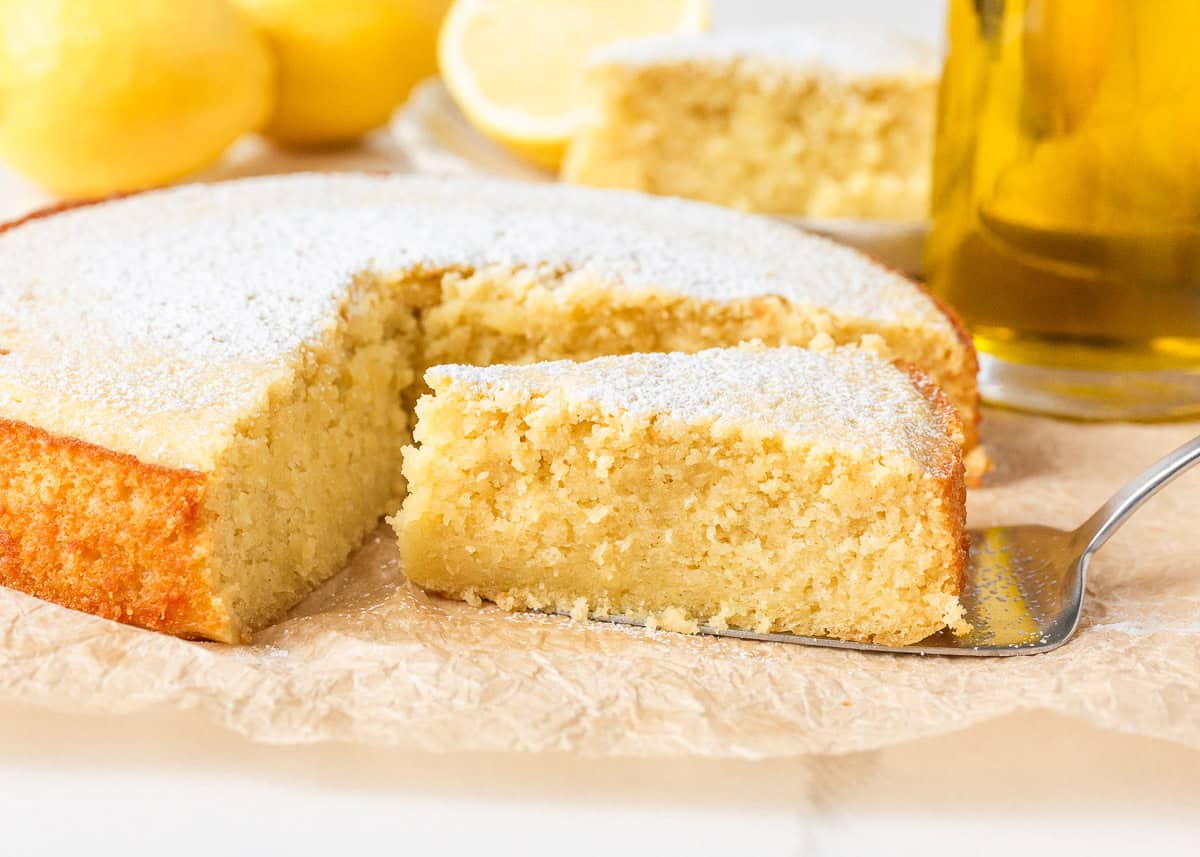
This lemon olive oil cake has a light, tender crumb and bright lemon flavor in every bite. Elegant yet simple, it’s an effortless one-bowl recipe that stays moist for days!
This post may contain affiliate links. Read disclosure policy.
Effortless One Bowl Cake
This lemon olive oil cake recipe is moist and light, full of fresh lemon flavor, and easy to make, which is why, along with lemon loaf cake and my lemon blueberry cake, it’s the perfect citrusy dessert for any occasion!
Made with extra virgin olive oil for a tender crumb and fresh lemons for bright notes, this cake is simple yet perfect for Easter, baby showers, a weeknight treat, and then again in the morning for brunch!
Why You’ll Love This Classic Recipe
- One bowl, one whisk. Italian-style and genuinely simple, about 20 minutes of prep.
- Stays moist for days. The olive oil keeps the crumb soft well past day one.
- Bright and balanced. Fresh lemon juice and zest against just enough sugar.
- Dresses up or down. Powdered sugar for a weeknight slice, a glaze for company.
- Made from pantry staples. Nothing fancy or hard to find.
Ingredients Notes
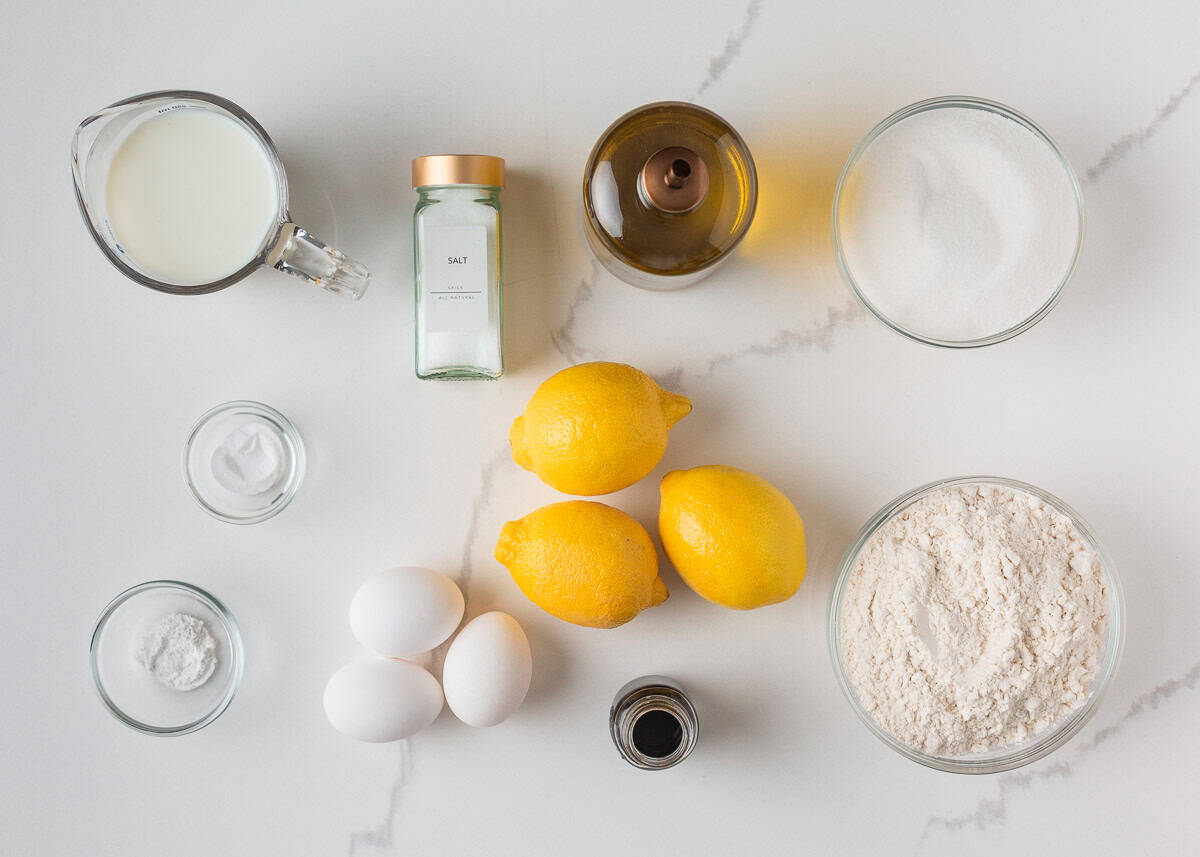
Find the full printable recipe with specific measurements below.
- Olive oil: Use extra virgin olive oil (light olive oil) for a mild flavor. The light olive oil gives the best flavor and isn’t too strong.
- Lemons: You’ll need both the juice and the zest from fresh lemons. Eureka or Lisbon lemons are nice and tart, whereas Meyer lemons are less acidic and sweeter.
- All-purpose flour: Spoon and level the flour. You don’t want to add too much, or it’ll create a dense, dry, and crumbly cake.
- Powdered sugar: To finish with a dusting before serving.
- You’ll also need: Large eggs, whole milk, vanilla, sugar, salt, baking powder, and baking soda.

Why Olive Oil Makes a Better Cake
Olive oil is the reason this cake stays so moist and tender. Butter firms up as it cools, which is why a lot of cakes taste dry by day two. Olive oil stays liquid at room temperature, so the crumb holds onto its softness for days. You get that same melt-in-your-mouth texture on the third slice as you did on the first.
It also does nice things for the flavor. A good light olive oil adds a gentle richness in the background without tasting like, well, olives. Paired with all that fresh lemon, it keeps the cake from feeling heavy or overly sweet. That balance is exactly why this style of cake has been a staple in Italian kitchens forever.
How to Make Lemon Olive Oil Cake
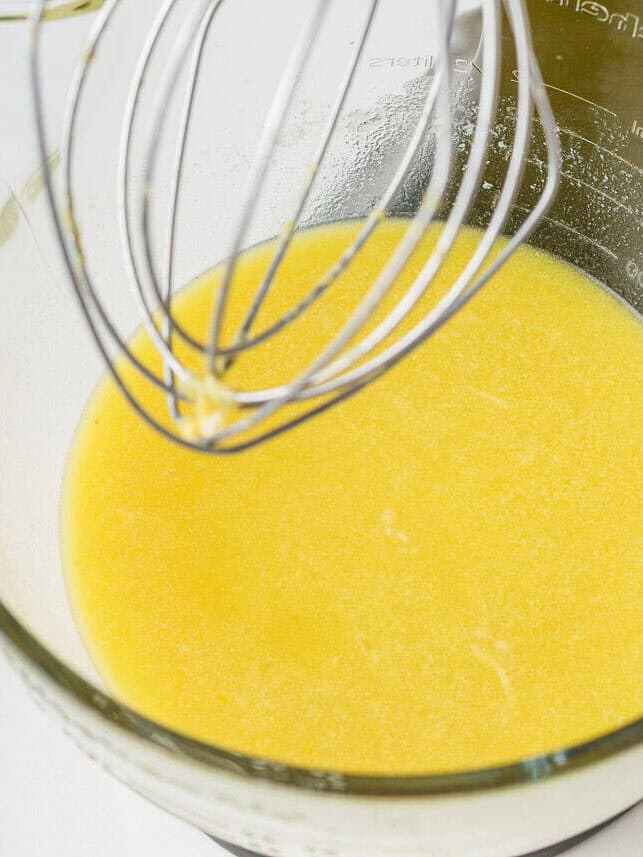
In a stand mixer fitted with the whisk attachment, beat the olive oil and eggs until smooth.
Then, add the milk, lemon juice, lemon zest, vanilla, and sugar and whisk until fully combined.
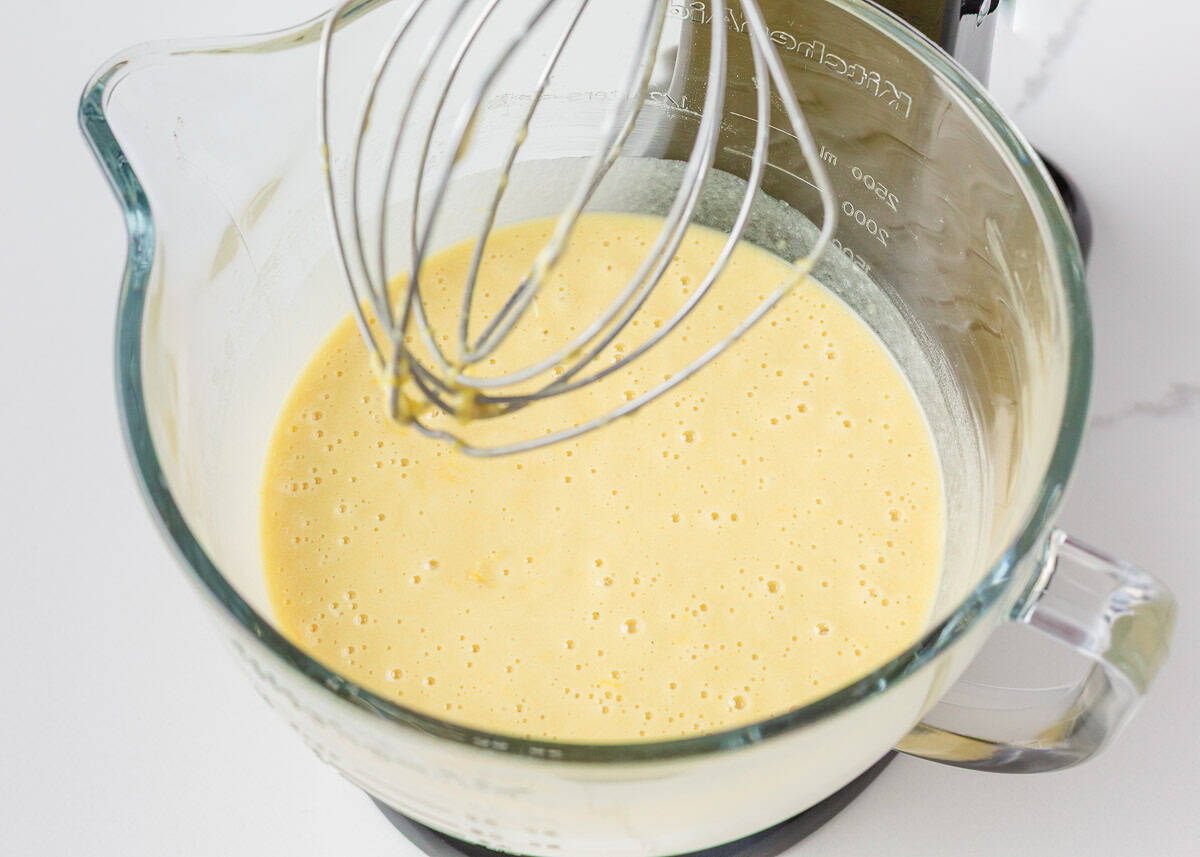
Add the flour, salt, baking powder, and baking soda, and mix until just combined. Do not overmix.
Pour the batter into a greased 9-inch springform pan lined with parchment paper and bake in a preheated 325°F oven for 55-65 minutes.
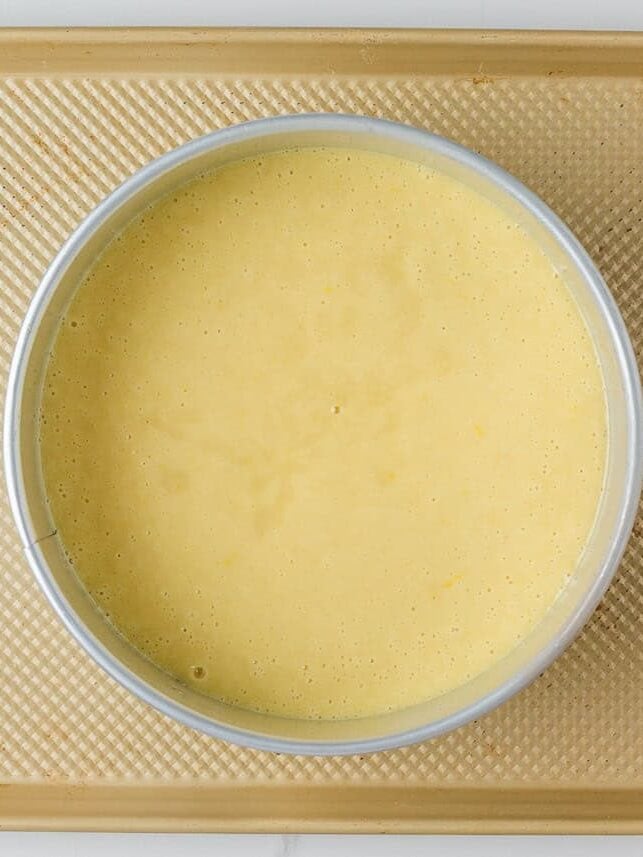
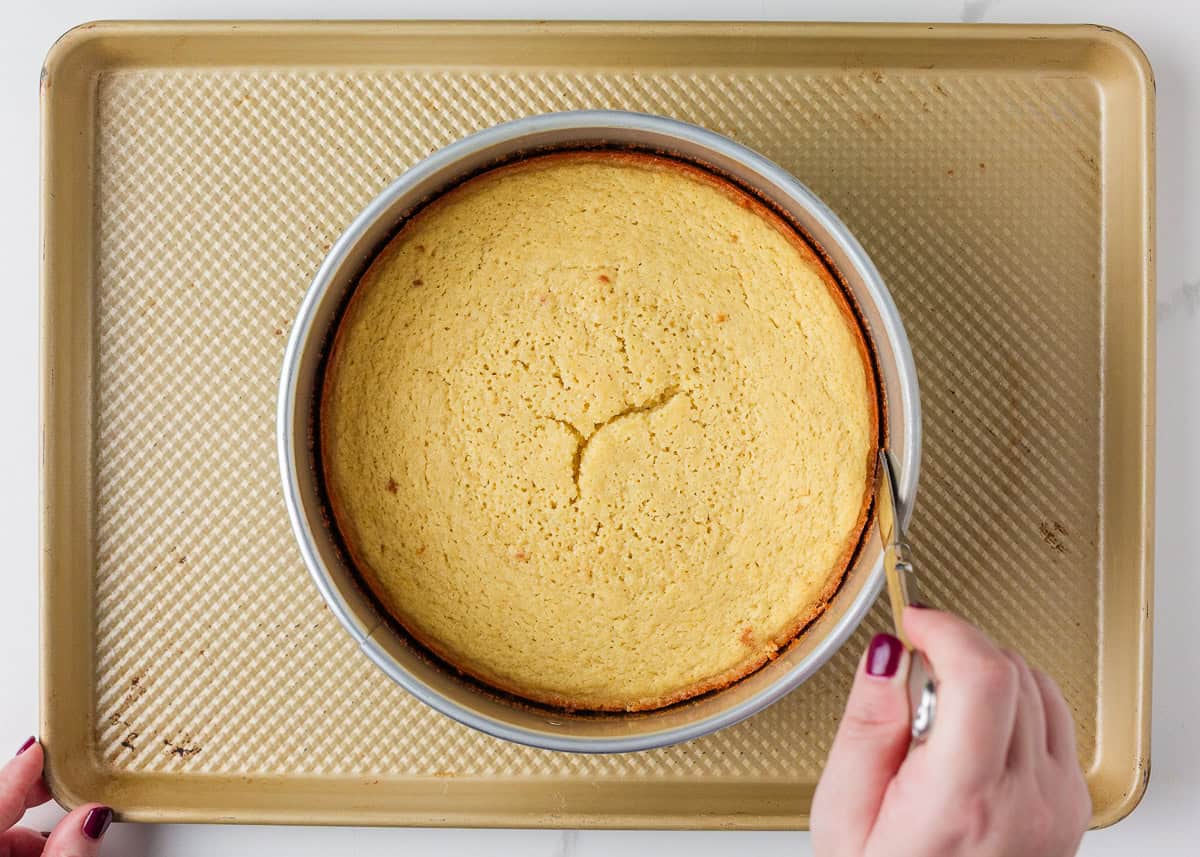
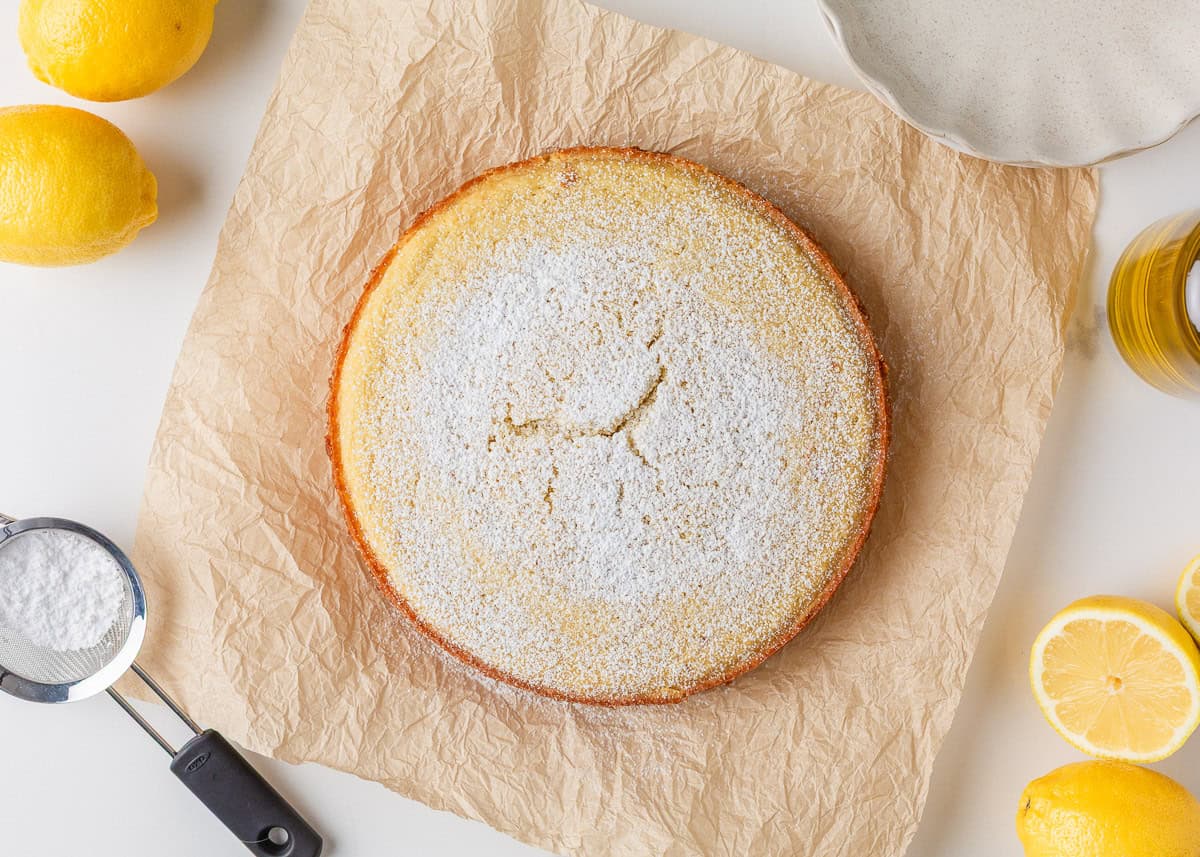
Let the lemon olive oil cake cool completely. Run a knife around the edge and then remove it from the pan. Dust with powdered sugar, slice, and enjoy!
Recipe Tips
- Use good quality olive oil. Reach for a light or mild olive oil, not a strong peppery one. A bold, grassy oil will fight the lemon and leave a savory aftertaste you don’t want in a dessert. Mild oil gives you all the moisture without taking over.
- No springform pan? No problem. A regular 9-inch round pan works fine. Just hit it with nonstick spray and line the bottom with a circle of parchment so the cake releases cleanly when you flip it out.
- Let it cool all the way before removing. This one matters more than it sounds. A warm cake is fragile and will crack or tear coming out of the pan. Once it cools and the crumb sets, it firms up and slides out in one piece.
- Don’t overmix the batter. Once the flour goes in, stir just until you don’t see dry streaks. Overmixing builds gluten and turns a tender cake dense and tough.
- Zest before you juice. Always zest your lemons while they’re still whole and firm. Trying to zest a squeezed, floppy lemon half is a losing battle.
Easy Swaps and Variations
Once you have the base down, this cake is easy to make your own. Here are a few ways to switch it up:
- Finish with a powdered sugar glaze. If a dusting isn’t enough for you, whisk 1 cup powdered sugar with 2 to 3 tablespoons lemon juice and pour it over the cooled cake.
- Add a lemon syrup soak. While the cake is still warm, brush it with a simple syrup made from equal parts lemon juice and sugar. It sinks in and makes the whole thing extra moist and punchy.
- Try different lemons. Eureka or Lisbon lemons give you that classic tart bite. Meyer lemons are sweeter and a little floral, so reach for those if you want a mellower, less acidic cake.
- Switch up the citrus. Orange or blood orange work beautifully in place of lemon if you want something a little sweeter and less sharp.

More lemon recipes to try include this classic lemon meringue pie, lemon blueberry cupcakes, lemon brownies and lemon coconut bars.
More Lemon Recipes





Lemon Olive Oil Cake
Video
Ingredients
- 1 cup olive oil , use light for a mild flavor
- 3 large eggs , room temperature
- 1 cup whole milk , room temperature
- 3 lemons , zested and juiced (about 1/2 cup)
- 1 teaspoon vanilla
- 1 ½ cups (300 grams) sugar
- 2 cups (270 grams) all-purpose flour
- 1 teaspoon salt
- ½ teaspoon baking powder
- ½ teaspoon baking soda
For dusting: powdered sugar
Instructions
- Prepare and preheat: Preheat oven to 325°F. Coat 9 inch round springform cake pan with nonstick cooking spray, line with parchment paper, and spray again.
- Whisk wet ingredients: In the bowl of a stand mixer, add 1 cup olive oil and 3 eggs. Use the whisk attachment and whisk until well combined and smooth. Add 1 cup milk, 1/2 cup lemon juice, lemon zest (about 3 Tablespoons), 1 teaspoon vanilla and 1 1/2 cups sugar. Whisk until smooth.
- Add dry ingredients: Add 2 cups flour, 1 teaspoon salt, 1/2 teaspoon baking powder and 1/2 teaspoon baking soda. Whisk until just barely combined, do not overmix. If needed, scrape down the edges with a spatula and gently combine.
- Bake: Pour batter into the springform pan, and place on a baking sheet. Bake for 55-65 minutes, or until a toothpick comes out clean.
- Cool: Cool completely before removing from pan. To remove from springform, run a knife along the edges of the pan first. Dust with powdered sugar before serving.
Last step: Please leave a comment and rating after you make the recipe.
Notes
Nutrition
Nutrition provided is an estimate. It will vary based on specific ingredients used.

Kathryn
Do you have any suggestions for what to replace the sugar with if I’m trying to cut down on refined white sugars?
Sarah @IHeartNaptime
Hi Kathryn, we haven’t tested this any other way than what is listed in the ingredients. My best guess would be a sugar substitute but taste will change.
Kenn Williams @ OkCodePromo.fr
Recommanderiez-vous d’utiliser du citron Meyer ou du citron Eureka pour obtenir un goût sucré-acidulé plus équilibré dans ce gâteau ?
Sarah @IHeartNaptime
Hopefully I translated this correctly, “Would you recommend using Meyer lemons or Eureka lemons to achieve a more balanced sweet-and-tart flavor in this cake?” It really depends on your personal preference. We used Eureka but Meyer lemons are a little sweeter and less acidic and will work, too! Enjoy.
Alisha
We loved the bright notes of lemon in this very moist and delicious cake! – Alisha, recipe tester
Sarah @IHeartNaptime
Yeah! So glad your family loved the lemon olive oil cake!